
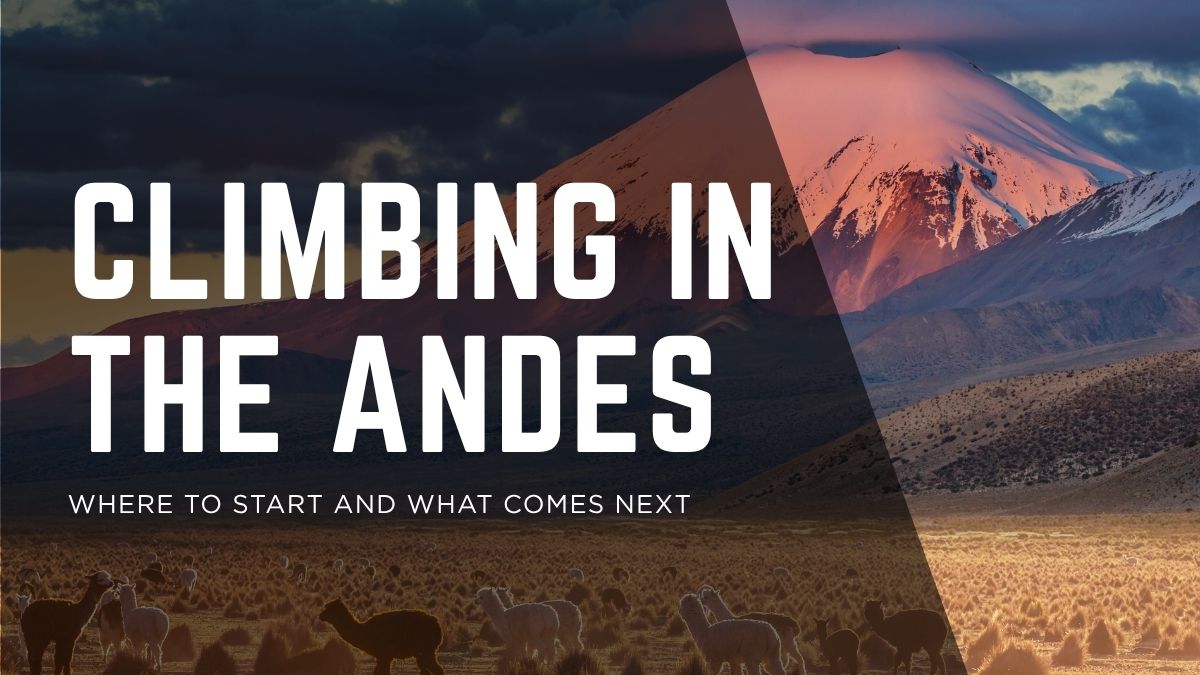
For a North American trekker with high altitude mountaineering ambitions, the single most underrated fact in the sport is a time zone map. The Andes, the longest continental mountain range on Earth and home to every 6,000 meter peak in the Americas except Denali, sit almost directly south of you. Quito and Lima match New York and Toronto in winter and sit one hour behind in summer, since neither city uses daylight saving time. Even Santiago is only a couple of hours off.
That means the biggest mountains you will ever climb outside Asia come without the tax that Nepal charges: no jet lag, no lost recovery days, no starting your acclimatization already wrecked from 30 hours of travel. You land ready. For working people with two or three weeks of vacation, that changes what’s possible per trip more than any training hack ever will.
But “go to the Andes” isn’t a plan, because the Andes run through five climbing countries and they are not interchangeable. Each one suits a different stage of your climbing life. We’ve spent time in all five, and the honest map, country by country, looks like this.
Ecuador: the school
If you’re starting, start here. Ecuador’s Avenue of the Volcanoes is the best structured classroom in the mountaineering world: a chain of glaciated peaks in a tidy geographic line, each one a rung, with a superb professional guiding culture, road access to high refugios, and a whole national economy fluent in taking trekkers and turning them into climbers.
The classic two week ladder runs through acclimatization hikes near Quito, then a first summit like Illiniza Norte, then Cotopaxi (5,897 m), the nearly perfect cone we’ve climbed and recommend to everyone, and for the strong, Cayambe (5,790 m), the great glaciated volcano that the equator line itself runs across, or Chimborazo (6,263 m), the summit that’s farther from the center of the Earth than Everest’s. Two weeks, four mountains, a complete altitude education.
What Ecuador teaches: crampons, rope travel, midnight starts, and your body’s personal response to real altitude, all with a warm town and good food between climbs. What it doesn’t have: true expedition remoteness. That’s a feature at this stage, not a bug.
Peru: the beauty
Peru is where climbing and travel fuse into one trip, and where the mountains get serious without getting less friendly. The Cordillera Blanca, the highest tropical mountain range in the world, packs dozens of 5,000 and 6,000 meter peaks into a range that lines the skyline above Huaraz, its mountain capital. Valleys with huts and mule support hold classic first summits like Pisco and Ishinca, with 6,000ers like Tocllaraju waiting one rung up. We’ve written a full guide to the range.
Peru’s trump card is that the tourism is world class in the same country. The Santa Cruz trek threads the Cordillera Blanca itself, and Cusco, the Sacred Valley, and Machu Picchu sit a short flight away. If you’re negotiating a trip that has to serve both a climber and a non climbing partner, Peru is the answer, and it isn’t close.
One more thing the climbing guidebooks undersell: the food. Our team will argue Peruvian cuisine is among the best in the world, and coming off a week of camp meals at 4,000 meters, a proper ceviche in Lima or a slow lunch in Huaraz lands like something you actually earned.
What Peru teaches: bigger days, camp based climbing, and mountains beautiful enough to explain the entire sport in one sunrise.
Bolivia: the 6,000 meter value
Bolivia is where the numbers bend in your favor. The Cordillera Real, an hour’s drive from La Paz, holds a lineup of 6,000ers with the shortest approaches and lowest costs anywhere in the sport, headlined by Huayna Potosí (6,088 m), often called the most accessible 6,000 meter peak on Earth. One rung up sits Illimani, the massive guardian of La Paz, a serious mountain by any standard. And because La Paz itself sits above 3,600 meters, the acclimatization starts the moment you land.
Bolivia asks a little more self sufficiency than Ecuador and gives back altitude per dollar that nothing else matches. It’s the natural second or third trip, the place you collect your first 6,000er, and the doorway to remote giants like Sajama (6,542 m), which is on our own team’s calendar this season.
Argentina and Chile: the giants
The far south is the top of the ladder. This is where the hemisphere’s biggest mountains live: Aconcagua (6,961 m), the highest mountain outside Asia, and Ojos del Salado (6,893 m), the highest volcano on Earth, standing in the Atacama desert with huts you can drive to and almost nobody on it.
These are not first trip mountains. You want to already know how your body behaves at 5,000 and 6,000 meters before you show up here, not find out at 6,500. Aconcagua also runs on a climbing permit from the provincial park, priced by season. But they’re the reason the whole ladder exists, and they come with their own rewards on the ground: Mendoza’s wine country below Aconcagua, the Atacama’s otherworldly salt flats and night skies below Ojos. Patagonia, for the record, is a different sport, its famous spires are technical rock climbing, and its gift to trekkers is the trails, like the O Circuit we walked in Torres del Paine.
The order that works
Put it together and the continent reads like a curriculum. Ecuador first, to learn the craft and meet real altitude with maximum support. Peru second, for bigger mountains and the trip your photos will never do justice to. Bolivia third, for your first 6,000er and the taste of expedition life. Argentina and Chile when the resume is real, for the giants.
You could spend a decade on that progression, no two trips alike, and none of them more than 2 hours off New York time. The Himalaya will still be there afterward. But plenty of climbers get to the far end of the Andes ladder and realize they’ve stopped needing the Himalaya to feel like the sport counts.
One standing note, since every one of these trips runs on acclimatization: altitude illness is a serious subject, learn the signs from a proper medical source before you go. Awareness only, not medical advice.
This ladder is exactly what our 10 Week Mountaineering Fitness Plan is aimed at, the next step up when the summits get serious. For the trekking rungs and the base fitness underneath everything, start with the Trekking Fitness Plan.
