
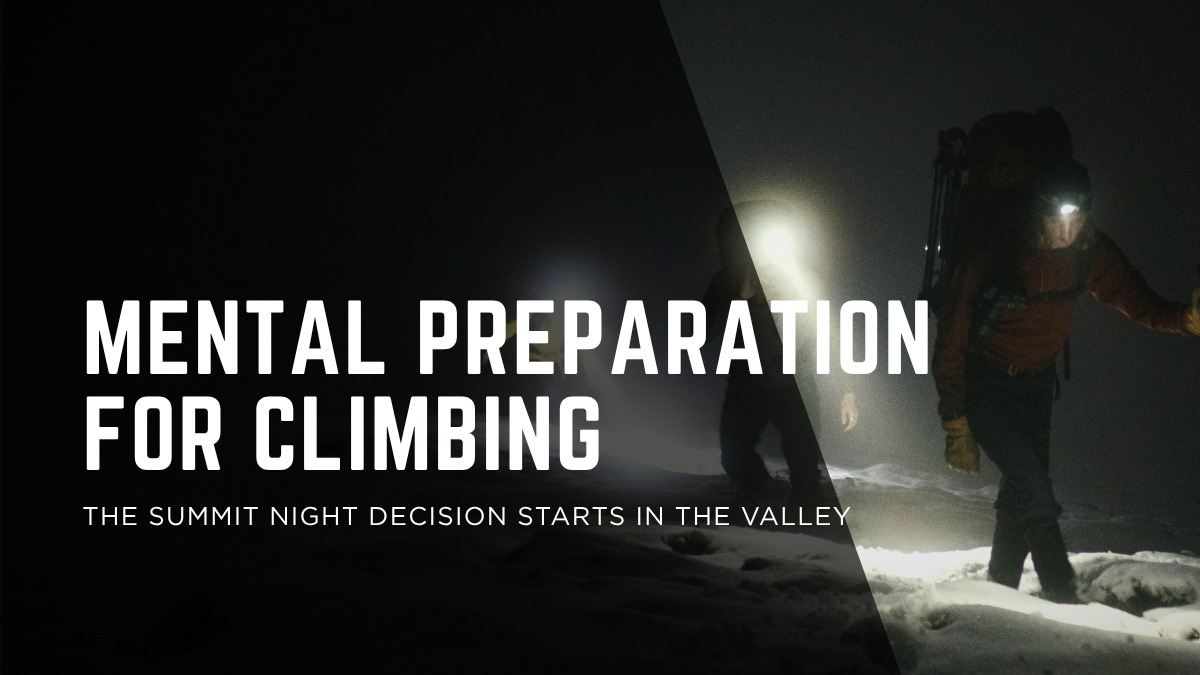
On a recent trip, one of the climbers on our team turned around on summit night. Turning around is normal. Weather, altitude and bad days send climbers down every season, and a good turnaround decision is one of the most respectable calls in the mountains.
What stayed with us was the timing. He didn’t decide on the mountain. He decided days earlier, in the valley, which is where mental preparation for a big climb either happens or doesn’t.
From early in the trip he was worried about the bigger mountain to come, and over a few days the worry hardened into a conclusion. Teammates offered what they had: experience, stories from past expeditions, the small mental tricks that get people through hard nights. None of it landed, because by then there was nothing left for him to decide. Summit night made it official.
When he stopped, the hardest ground of the night was already behind him. His legs had done the part he was most afraid of. He turned around anyway, because the decision had been made days before, and nothing his legs did that night changed it.
Where mental preparation happens
If you’ve done a big trek, you’ve probably seen the same thing from a different angle. The person at a Kilimanjaro camp who decides, two days before the midnight start, that the summit isn’t for them. The trekker in the teahouse doing tomorrow’s math out loud, looking for someone to give them permission to stop.
In our experience, doubt is rarely new on summit day. It builds over several days, and by the time the hard section arrives, the outcome is often already settled.
What fitness does for the mind
Fitness shrinks the job willpower has to do. You feel effort as a share of what you have. The fitter you are, the smaller the share any given slope takes, and the easier the same hour feels. Willpower runs out, and fitness means you spend it on the few moments that need it instead of on every ordinary step.
The mind also changes how hard the body feels. In a 2009 study, people who spent 90 minutes on a demanding mental task before a cycling test quit about 15 percent sooner than when they’d watched a documentary instead. They rated the same effort as harder, while their heart rate and other physical measures showed no difference. Days of worry before a summit push are not a lab task, but the direction is the same: a tired, anxious mind makes the same work feel heavier.
Training helps with that too, because months of completed sessions are evidence. When doubt starts negotiating at 1 am, a trained climber can point to the long rucks finished, the stair sessions done, and the weeks that added up. Confidence built on a training log holds up better than confidence built on hope. Our self check, am I fit enough for my trek, is a good way to turn that log into an answer before you leave.
What fitness can’t do
Grit can’t undo a decision that’s already made. Fitness doesn’t touch fear or doubt directly. We watched his legs clear the hardest ground of the night, and it made no difference to a decision he’d reached days earlier.
That part is separate work. If a worry has been growing for days, say it out loud in the valley, to a guide or a teammate, while there’s still room to plan around it: an agreed turnaround point, a shorter objective, an extra rest day. On summit night the options shrink to two, keep going or stop.
So we hold both. Train hard, so your willpower isn’t spent on a thousand small battles and you start the big night with proof instead of hope. Then accept that on the biggest day you still have to choose to keep going, and no amount of training makes that choice for you.
Weather, altitude and a body having a bad day are good reasons to turn around. A decision made three days earlier and never talked through is the one you can do something about before you leave the valley.
