
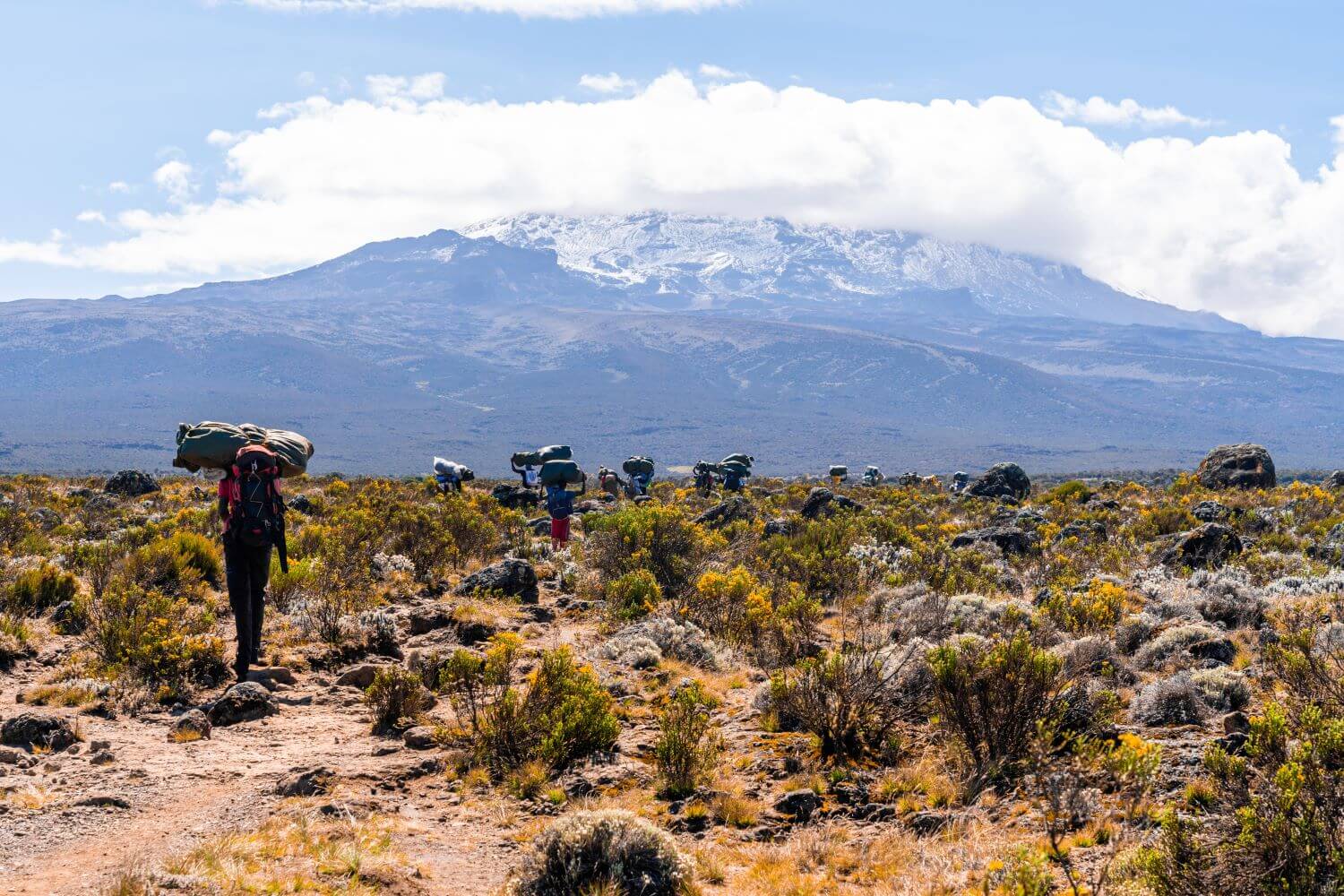
Kilimanjaro has a reputation problem. At 19,341 feet, it’s the highest peak in Africa and one of the Seven Summits, yet it’s often called the “easiest” of the major mountains. No technical climbing required. No ropes, no ice axes, no previous mountaineering experience necessary. Just walk to the top.
This reputation is killing people’s summit dreams.
Here’s the brutal reality: Only 65-70% of the 50,000 annual climbers actually reach Uhuru Peak. On popular routes like the 5-day Marangu, success rates plummet to as low as 27%. Even experienced hikers who’ve conquered challenging treks elsewhere find themselves turning back, defeated by altitude sickness, exhaustion, or the sheer mental challenge they never saw coming.
The climbers who succeed understand something crucial: Kilimanjaro isn’t easy—it’s just non-technical. There’s a massive difference, and recognizing this difference is the first step toward joining the minority who actually make it to the top of Africa.
The Great Kilimanjaro Deception
The “easy mountain” myth persists because Kilimanjaro doesn’t require ropes, crampons, or technical climbing skills. You literally can walk to the summit. This accessibility makes it seem approachable compared to peaks like Everest or Denali.
But this comparison misses the point entirely. Kilimanjaro presents unique challenges that can be more devastating than technical climbing obstacles:
The Rapid Ascent Reality
The Challenge: Unlike gradual approaches to other major peaks, most Kilimanjaro routes force rapid altitude gain in just 4-7 days. You start in tropical heat at 6,000 feet and attempt to reach 19,341 feet before your body has time to properly adapt.
The Statistics: Routes with inadequate acclimatization time show this brutal math:
- 5-day routes: 27-40% success rate
- 6-day routes: 60-75% success rate
- 7-8 day routes: 85-95% success rate
The mountain doesn’t care how fit you are at sea level. Physics governs altitude adaptation, and physics can’t be rushed.
The “Walking” Misconception
The Reality: Yes, you walk to the summit. You walk for 6-8 hours daily, carrying a pack, at altitudes where oxygen levels drop to 40% of sea level. By summit day, you’re attempting a 12-15 hour push that starts at midnight in sub-freezing temperatures.
What This Actually Means:
- Summit day: 4,000+ feet of elevation gain in thin air
- Total trek: 25,000+ feet of cumulative elevation gain
- Temperature swings: From 80°F at base to -10°F at summit
- Sustained effort: 6+ consecutive days with no recovery
The successful climbers understand that “just walking” at 19,000 feet bears no resemblance to walking at sea level.
The Mental Challenge Nobody Mentions
The Hidden Factor: Kilimanjaro’s mental demands catch people completely off guard. Unlike technical climbs where you’re focused on specific moves, Kilimanjaro offers hours of walking in discomfort with nothing to distract from altitude headaches, nausea, and the growing realization that you still have hours to go.
Summit night psychology breaks many climbers. Starting at midnight in darkness, cold, and thin air, with 6-8 hours of continuous climbing ahead, tests mental resilience in ways that shorter, more technical challenges don’t.
Route Selection: Your First Critical Decision
Your route choice largely determines your success probability. Each route has a dramatically different success rate based on its acclimatization profile and duration.
The High-Success Routes (85-95% Success Rates)
Lemosho Route (7-8 days):
- Why it works: Excellent “climb high, sleep low” profile
- Success rate: 85-90% (7-day) / 90-95% (8-day)
- Best for: First-time climbers who want the highest success probability
- Trade-offs: Higher cost due to longer duration
Northern Circuit (8-9 days):
- Why it works: Longest route with best acclimatization
- Success rate: 95%+
- Best for: Climbers who want virtually guaranteed success and solitude
- Trade-offs: Most expensive option, requires more time off work
Machame Route (7 days):
- Why it works: Good acclimatization, scenic variety
- Success rate: 85%+ (7-day) / 75% (6-day)
- Best for: Balance of success rate, scenery, and reasonable cost
- Trade-offs: More crowded than Lemosho
The Moderate Success Routes (70-85% Success Rates)
Rongai Route (6-7 days):
- Why it’s different: Approaches from the north, gentler gradient
- Success rate: 75-85% depending on duration
- Best for: Climbers wanting less crowded experience
- Trade-offs: Less scenic, poorer acclimatization profile than Lemosho
The Risky Routes (27-60% Success Rates)
Marangu Route (5-6 days):
- The problem: Rapid ascent without proper acclimatization time
- Success rate: 27% (5-day) / 60% (6-day)
- Why people choose it: Cheapest option, hut accommodation
- Reality check: The “easy” route has the worst success statistics
The Truth About Marangu: Tour operators love this route because it’s profitable—quick turnaround, no camping gear needed, maximum clients per season. But climbers pay the price with the industry’s worst success rates.
The Physiology of Failure: Why Bodies Quit
Understanding why bodies fail on Kilimanjaro helps explain why preparation must address specific physiological challenges.
Altitude Sickness: The Summit Killer
The Science: At Kilimanjaro’s summit, oxygen partial pressure is 43% of sea level. Your cardiovascular system must work more than twice as hard to deliver adequate oxygen to working muscles.
The Progression:
- Mild AMS: Headache, nausea, fatigue (manageable but warning signs)
- Moderate AMS: Vomiting, severe headache, coordination issues (descent recommended)
- Severe AMS (HACE/HAPE): Confusion, difficulty breathing (life-threatening emergency)
Critical Insight: Altitude sickness doesn’t discriminate. Age, fitness level, and previous climbing experience provide no immunity. The only proven prevention is gradual ascent—which is why route selection matters so much.
The Cardiovascular Demand Reality
What Happens: Even with perfect acclimatization, your cardiovascular system operates in crisis mode above 15,000 feet. Heart rates elevate 20-30 beats per minute above normal, breathing becomes labored, and perceived exertion skyrockets.
The Preparation Gap: Most climbers prepare with sea-level fitness that doesn’t translate to high-altitude performance. Running a sub-7-minute mile at sea level doesn’t help when you’re struggling to walk at altitude.
Effective Preparation Focus:
- Aerobic base development for sustained moderate effort
- Altitude simulation training when possible
- Multi-day endurance building rather than peak performance
- Mental training for sustained discomfort management
Training Reality: Beyond Generic Fitness
Kilimanjaro training requires specific adaptations that general fitness programs don’t address.
The Cardiovascular Foundation
What Most People Do: Run, bike, or do cardio classes to “get in shape.”
What Kilimanjaro Demands: Sustained moderate effort at altitude for 6-8 hours daily, for multiple consecutive days.
The Training Gap: High-intensity intervals and short-duration cardio don’t prepare you for Kilimanjaro’s sustained, moderate-intensity demands under hypoxic stress.
Effective Cardiovascular Training:
- Long, steady efforts at conversational pace (3-6 hours)
- Back-to-back training days to simulate consecutive climbing
- Nasal breathing practice to improve oxygen efficiency
- Hill training to prepare for continuous uphill effort
- Systematic training progression over 12-16 weeks minimum
Strength Training for Kilimanjaro
What Most People Do: General gym workouts focusing on maximum strength.
What Kilimanjaro Demands: Strength endurance for thousands of steps uphill while carrying a pack, plus eccentric strength for steep descents.
The Specific Requirements:
- Step-up endurance for endless rocky staircases
- Core stability for pack carrying over uneven terrain
- Posterior chain strength for posture maintenance during long days
- Functional movement patterns that translate to actual climbing
Load-Bearing Preparation
The Missing Element: Most climbers train without weight, then suddenly carry 15-20 pounds during the actual climb.
The Reality: Pack weight changes everything—balance, energy expenditure, postural demands, and movement efficiency.
Effective Load Training:
- Progressive rucking programs building from 10 to 25+ pounds
- Multi-hour loaded hikes that simulate daily climbing demands
- Gear integration training with actual pack and equipment
- Posture and movement practice under load
Gear Strategy: Function Over Fashion
Kilimanjaro gear discussions often focus on brand names and technical specs, but success depends on understanding the specific environmental challenges.
The Five Climate Zones Challenge
The Reality: Kilimanjaro takes you through five distinct climate zones in a matter of days:
- Rainforest (6,000-9,000ft): Hot, humid, muddy
- Moorland (9,000-13,000ft): Cool days, cold nights
- Alpine Desert (13,000-16,000ft): Extreme temperature swings
- Arctic Zone (16,000ft+): Sub-freezing, high winds, intense sun
Gear Strategy: Your clothing system must handle 100-degree temperature swings and radically different conditions.
Essential Gear Categories
Temperature Management System:
- Base layers: Merino wool or synthetic (never cotton)
- Insulation: Down jacket for camp, synthetic backup for wet conditions
- Shell layer: Waterproof/breathable jacket and pants
- Extremities: Insulated gloves, warm hat, sun hat, quality socks
Technical Equipment:
- Footwear: Broken-in hiking boots (50+ miles before departure)
- Pack: 30-40L daypack with proper fit and adjustment
- Sleep system: 4-season sleeping bag rated to -10°C/14°F
- Hydration: Insulated bottles plus hydration system with freeze protection
High-Altitude Specifics:
- Sun protection: High-SPF sunscreen, quality sunglasses, lip protection
- Headlamp: Reliable with extra batteries (cold drains batteries quickly)
- Gaiters: Protection from volcanic dust and scree
- Trekking poles: Essential for stability and joint protection
Gear Testing Reality
The Standard Mistake: Testing gear on perfect-weather day hikes.
Effective Testing Strategy:
- Multi-day integration: How does everything work together over consecutive days?
- Temperature extremes: Test gear in cold, heat, and wet conditions
- Full-system loading: Practice with complete pack weight and all layers
- Stress testing: How does gear perform when you’re tired and conditions are challenging?
Altitude Acclimatization: The Success Multiplier
Acclimatization is the single most important factor in Kilimanjaro success, yet most climbers approach it passively.
The Physiological Reality
What’s Happening: Your body makes desperate adaptations to function in low-oxygen conditions:
- Respiratory: Increased breathing rate and depth
- Cardiovascular: Elevated heart rate and cardiac output
- Cellular: Improved oxygen extraction and utilization
- Hematological: Increased red blood cell production (takes weeks)
The Time Factor: These adaptations happen on different timescales. Some occur within hours, others take weeks. The fastest practical acclimatization still requires gradual ascent over multiple days.
Strategic Acclimatization
The “Climb High, Sleep Low” Principle:
- Active acclimatization: Hike to higher elevations during the day
- Return to lower elevations for sleeping when possible
- Progressive exposure rather than passive rest
Critical Elevation Benchmarks:
- 9,000ft (Machame/Lemosho day 1): Initial adaptation begins
- 13,000ft (Barranco/Dingboche equivalent): Critical acclimatization zone
- 16,000ft+ (High camps): Maximum stress zone requiring perfect preparation
Route-Specific Acclimatization Profiles
Why Lemosho/Northern Circuit Work:
- Gradual initial ascent allows body time to begin adaptations
- Multiple “climb high, sleep low” opportunities
- Rest days positioned at optimal elevations
- Summit attempt from well-acclimatized base
Why Marangu Fails:
- Rapid ascent without adequate adaptation time
- Poor “climb high, sleep low” profile
- Summit attempt from inadequately acclimatized base
- No buffer for individual variation in adaptation
Mental Preparation: The Overlooked Success Factor
Kilimanjaro’s mental challenges are consistently underestimated and inadequately prepared for.
Summit Night Psychology
The Challenge: Starting at midnight in darkness, cold, and thin air, knowing you have 6-8 hours of continuous climbing ahead. No technical moves to focus on—just sustained discomfort and the mental battle of continuing when every instinct says stop.
Common Mental Breakdowns:
- Hour 2-3: Questioning the decision, wanting to turn back
- Hour 4-5: Physical discomfort peaks, mental fatigue sets in
- Hour 6-7: The final push when many climbers quit despite being close
Mental Training Strategies:
- Discomfort tolerance training: Cold exposure, extended low-intensity efforts
- Visualization practice: Mental rehearsal of summit night challenges
- Mantras and self-talk: Prepared responses to negative thoughts
- Purpose clarification: Deep understanding of why this matters to you
Managing Altitude Effects on Cognition
The Reality: Altitude impairs cognitive function, making good decisions harder when good decisions become critical.
Preparation Strategies:
- Simplify decision-making: Pre-planned responses to common situations
- Recognize impairment: Understanding when altitude is affecting judgment
- Communication systems: Clear protocols with guides and partners
- Conservative bias: When in doubt, prioritize safety over summit
Nutrition and Hydration: Fueling Performance
Kilimanjaro nutrition isn’t about exotic supplements—it’s about maintaining adequate fuel when appetite disappears and options are limited.
Hydration at Altitude
The Challenge: Dehydration accelerates altitude sickness and dramatically impairs performance. At altitude, you lose water through increased respiration rate and dry air.
Effective Hydration Strategy:
- 4+ liters daily above 10,000 feet
- Warm fluids preference: Tea, hot chocolate, soup for psychological comfort
- Electrolyte replacement: For extended daily exertion
- Water treatment: Purification tablets or filter for local sources
- Freeze prevention: Insulated bottles and system for summit night
Nutrition for Sustained Performance
The Challenge: Appetite suppression at altitude combined with limited food variety makes adequate nutrition difficult.
Strategic Nutrition:
- High-calorie density foods: Nuts, energy bars, dried fruits you know you’ll eat
- Carbohydrate emphasis: Your body prefers carbs for altitude work
- Familiar foods: Bring snacks you enjoy when appetite is poor
- Don’t restrict calories: Kilimanjaro burns 4,000+ calories daily
- Summit night fuel: Easy-to-digest, high-energy foods accessible in pockets
The Success Timeline: When to Start Preparing
Kilimanjaro success requires systematic preparation over months, not weeks.
16+ Weeks Before Departure
Foundation Phase:
- Medical evaluation and fitness baseline assessment
- Route selection and booking with reputable operator
- Begin aerobic base building with emphasis on duration over intensity
- Start gear research and major purchase decisions
12-16 Weeks Before Departure
Development Phase:
- Implement systematic training program addressing cardiovascular, strength, and mental preparation
- Begin weekend hiking with progressive distances and elevation
- Start gear testing in real conditions
- Begin altitude research and acclimatization strategy
8-12 Weeks Before Departure
Specificity Phase:
- Add pack weight training progressing to full trek loads
- Increase training volume to simulate multi-day demands
- Complete gear system testing in various weather conditions
- Intensive mental preparation practices
4-8 Weeks Before Departure
Integration Phase:
- Multi-day training blocks simulating consecutive climbing days
- Final gear adjustments and replacements
- Travel and permit preparations
- Peak training volume before taper begins
1-4 Weeks Before Departure
Taper and Final Preparation:
- Reduce training volume while maintaining movement quality
- Focus on recovery and health optimization
- Final logistics: Packing, travel, last-minute preparations
- Mental preparation: Confidence building, scenario planning
Cultural Awareness and Responsibility
Kilimanjaro isn’t just a physical challenge—it’s a journey through one of Tanzania’s most culturally significant regions.
Respect for Local Communities
Understanding the Impact: Your climb directly supports local communities through guide, porter, and cook employment. The climbing industry is a major economic driver for the region.
Respectful Practices:
- Learn basic Swahili: “Jambo” (hello), “Asante” (thank you), “Karibu” (welcome)
- Understand tipping culture: Plan for appropriate tips for guides, porters, and cooks
- Respect local customs: Dress modestly in villages, ask permission for photos
- Support local economy: Buy souvenirs and supplies locally when possible
Environmental Responsibility
The Challenge: 50,000+ annual climbers create significant environmental pressure on Kilimanjaro’s fragile ecosystems.
Your Responsibility:
- Leave No Trace principles: Pack out all waste, stay on designated trails
- Water conservation: Use water responsibly in a region where it’s precious
- Support conservation: Choose operators committed to environmental protection
- Climate awareness: Understand how climate change is affecting Kilimanjaro’s glaciers
Common Preparation Mistakes That Guarantee Failure
Even well-intentioned preparation often goes wrong in predictable ways.
Mistake 1: Route Selection Based on Price
The Error: Choosing the cheapest option (usually 5-day Marangu) to save money. The Consequence: 27% success rate and miserable experience for those who do summit. The Fix: Invest in a longer route with proper acclimatization. The cost difference is negligible compared to the total trip investment.
Mistake 2: Training Like a Runner Instead of a Climber
The Error: Focusing on speed and intensity rather than endurance and altitude-specific preparation. The Consequence: Great sea-level fitness that doesn’t translate to altitude performance. The Fix: Train for sustained moderate effort, consecutive day performance, and load-bearing endurance.
Mistake 3: Gear Obsession Over Preparation
The Error: Spending more time researching gear than developing physical capabilities. The Consequence: Perfect gear worn by an unprepared body. The Fix: 80% of preparation effort should focus on physical and mental conditioning.
Mistake 4: Underestimating the Mental Challenge
The Error: Assuming physical preparation is sufficient for success. The Consequence: Physical capability undermined by mental breakdown during summit night. The Fix: Include systematic mental training for sustained challenge management.
Mistake 5: Inadequate Time Investment
The Error: Starting serious preparation 4-8 weeks before departure. The Consequence: Insufficient physiological adaptations and increased injury risk. The Fix: Begin systematic preparation at least 16 weeks before departure.
Your Kilimanjaro Success Strategy
Ready to join the minority who actually reach Uhuru Peak? Success requires understanding that Kilimanjaro isn’t easy—it’s non-technical. There’s a crucial difference, and that difference determines whether you summit or turn back disappointed.
The climbers who succeed aren’t necessarily the strongest or most experienced. They’re the ones who understand what they’re actually facing and prepare systematically for those specific challenges.
Whether you’re considering your first major mountain or you’re an experienced climber taking on Kilimanjaro, the principles remain the same: route selection determines your probability of success, systematic preparation builds the capabilities you need, and mental resilience carries you through the inevitable difficult moments.
This comprehensive approach to Kilimanjaro preparation is detailed in our Complete Trek Preparation Guide and implemented systematically in our 8-week Beginner Trekking Fitness Plan.
Don’t let the “easy mountain” reputation fool you into inadequate preparation. Kilimanjaro rewards systematic preparation and punishes assumptions. The summit is waiting, but only for those who truly understand what it takes to get there.
Your journey to the Roof of Africa starts with preparation. Make sure you’re ready for what the mountain actually demands.
