
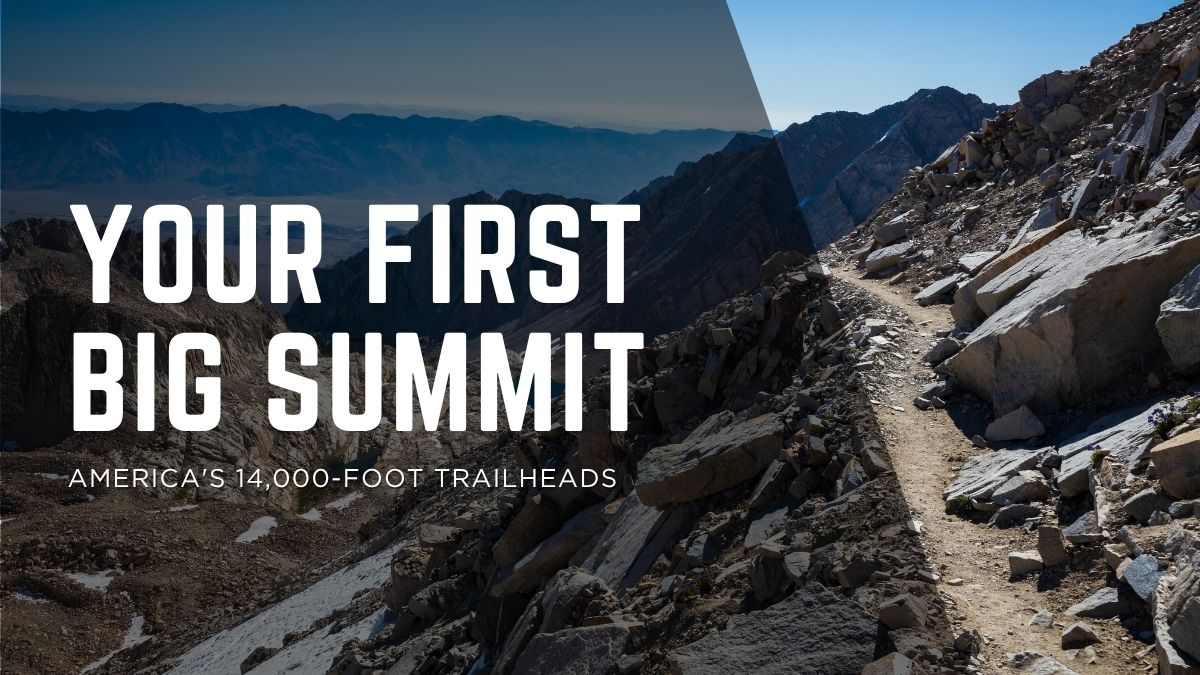
Here’s something that surprises trekkers dreaming of Nepal and Peru: some of the most accessible high altitude hiking on the planet is sitting in the American West, no passport, no permit battles (mostly), no guide, and no technical gear required. Marked trails lead to summits above 4,300 meters (14,000+ feet), climbable in a single day by a well prepared hiker.
Colorado alone has dozens of these giant peaks, and locals have made a whole culture of hiking them. For anyone anywhere near North America, they are the single best first step into the high altitude world: a real summit, real thin air, and a real education in what altitude does to your specific body, all within a normal weekend. If bigger mountains are anywhere in your dreams, whether that’s Kilimanjaro, the big treks, or eventually true mountaineering, this is where the ladder starts.
Here’s the first timer’s guide.
Where to start: the friendly giants
Not all high summits are equal. Hikers rate routes by class, and for a first outing you want Class 1 or easy Class 2: genuine trail all the way, no scrambling, no exposure that demands a head for heights. A few peaks have earned their reputations as the classic first summits:

Quandary Peak (4,350 m / 14,272 ft), Colorado. Probably the most popular first big summit in America: a clear trail from a trailhead near Breckenridge, about 11 km (6.75 miles) round trip, straightforward the whole way. Busy on summer weekends, which as a first timer you may actually welcome: company on the trail and a beaten path to follow. Note it now uses a parking reservation system in peak season, so check current arrangements.

Mount Bierstadt (4,287 m / 14,065 ft), Colorado. The other beloved starter, launching from the gorgeous Guanella Pass at a high trailhead, roughly 11 km (7 miles) round trip on good trail.

Grays and Torreys Peaks (4,352 m / 14,278 ft and 4,349 m / 14,267 ft), Colorado. The classic two-for-one: a pair of connected summits often hiked together, giving you a taste of ridgeline walking between them.

Mount Elbert (4,401 m / 14,440 ft), Colorado. The highest point in Colorado and the second highest in the lower 48, and still a non-technical trail hike. A bigger day than the ones above, but a magnificent first or second summit.

Mount Whitney (4,421 m / 14,505 ft), California. The tallest peak in the contiguous US, reachable by trail, but a monster day: roughly 35 km (22 miles) round trip with about 1,900 m of gain, governed by a permit lottery months in advance. Treat Whitney as a goal for your second season, not your first weekend.
One important boundary: peaks like Mount Rainier are not on this list, because Rainier is glaciated mountaineering, ropes and crampons and all, a different sport with a different doorway. The peaks above are hikes. Huge ones, but hikes.
The two rules that aren’t optional
Rule one: off the summit before the afternoon storms. The defining hazard on these peaks isn’t the altitude, it’s the weather pattern. On summer afternoons, thunderstorms build over the high country with astonishing regularity, and a bare summit ridge at 4,300 meters is precisely where you do not want to meet lightning. The time honored local rule: start in the dark (headlamps at a 4 or 5 am trailhead are completely normal here) and be heading down from the summit by around noon, earlier if the sky says so. If clouds are building and you’re not on top yet, the mountain is telling you something, and turning around is the strongest move in the sport.
Rule two: respect the altitude, even on a day hike. Here’s what catches flatlanders: you can fly from sea level and be above 4,000 meters barely a day later, an ascent profile no big trek would ever allow. At these elevations the air holds roughly 40 percent less oxygen than at sea level, and your body notices. Most visiting hikers feel some of it: breathlessness far out of proportion to effort, a headache, unusual fatigue. Give yourself the easiest insurance there is: arrive a day or two early and sleep at an intermediate elevation (Denver at 1,600 m, or better, a mountain town near 2,500 m) before summit day, keep your first target modest, drink steadily, and go slower than your ego suggests. And learn the signs of altitude sickness from a proper medical source before you go. It costs nothing and matters more than anything in your pack. Fitness helps enormously with everything altitude does to your day, but as we say every time, fitness is not immunity, and worsening symptoms outrank any summit.
Training for your first big one
The good news: these peaks demand exactly the fitness a trek does, just concentrated into one day, which makes them both a perfect training goal and a perfect test.
A typical starter summit is a 5 to 8 hour day with roughly 1,000 meters of climbing, at altitude, followed by, and by now you can finish this sentence, the same 1,000 meters back down on tired legs, on loose rock, in the hours when most slips happen. Build a steady aerobic base over a couple of months, put real elevation gain into your training hikes, get comfortable carrying a daypack with layers and plenty of water, and give your legs the descent strength and ankle durability that the scree on the way down will test. Bring genuine layers regardless of the forecast (summit weather is its own country), serious sun protection (UV is much stronger up there), and more water than seems reasonable.
The reality check money can’t buy
Here’s the real value of a first American high summit: it answers a question you can’t get answered any other way. What does altitude actually do to you? Books won’t tell you. Other people’s stories won’t either, because everyone responds differently. A long weekend on Quandary or Bierstadt gets you the answer safely and cheaply, with an easy walk back to the car if your body says no, before you’ve bet an international trip on it.
And once you’ve stood at 14,000 feet with your lungs working overtime and holding up fine, big mountains stop feeling like something other people do. Most people come down asking the same question: okay, what’s bigger?
Our Trekking Fitness Plan gets you summit day ready with strength and aerobic conditioning, stair climber sessions, descent work and a ruck progression that reaches 3 to 4 hours by week 8. When “what’s bigger” gets serious, the Mountaineering Fitness Plan is the next rung.
Image credits: Mount Bierstadt by Thomson M, CC BY 3.0, via Wikimedia Commons (resized). Grays and Torreys Peaks by Jeff P, CC BY 2.0, via Wikimedia Commons (resized). Mount Elbert by Hogs555, CC BY-SA 4.0, via Wikimedia Commons (resized).
