
The famous mountains earn their fame. We’ve written thousands of words about the big three treks and the classic first peaks, and we’d defend every one of them. But fame has costs: crowds, prices, permits, and the strange feeling of waiting in line in the wilderness.
Meanwhile the world’s most underrated mountains to climb deliver the same enormous days without any of that. Underrated is doing specific work here: measured against those three, not empty, and a couple of these are busy in their own right. Here are seven we’d put on any adventurous trekker’s radar, our own picks, roughly ordered from accessible to ambitious. Details like fees and access rules shift, so treat specifics as a starting point and verify when you plan.
The 7 underrated mountains to climb, easiest first
1. Mount Olympus, Greece (2,917 m / 9,570 ft)
The home of the gods is a real, climbable mountain, and a magnificent two-day outing: a forested approach from Prionia to a stone refuge at 2,100 meters, dinner on a terrace above the clouds, then a summit morning along a dramatic ridge. The final push to the true top, Mytikas, is an exposed hands-on scramble. The neighboring summit, Skala, sits 51 meters lower, requires nothing but legs, and shares the same staggering view down the Aegean side. Take Mytikas if scrambling is your thing, take Skala with zero shame if it isn’t, and either way you’ve climbed Olympus. Mythology, refuge culture, and a genuine mountain morning for the effort of a big weekend.
The numbers: 2,917 m. Two days, hut to hut, no guide required. Season roughly June to October. The true summit, Mytikas, is an exposed hands-on scramble. The neighboring Skala summit (2,866 m) needs nothing but legs.
2. Toubkal, Morocco (4,167 m / 13,671 ft)
The highest peak in North Africa, climbable in two days from a trailhead village 75 to 90 minutes by road from Marrakech. You leave a souk, sleep at a mountain refuge, and stand on a 4,000er above the Atlas by the next lunchtime. Non-technical in the standard summer season (winter is a different, cramponed story), and the math is hard to beat anywhere: 4,167 meters, two days, a 75 to 90 minute drive from an international airport. Guides are required these days. Check current rules.
The numbers: 4,167 m. Two days from the village of Imlil via a mountain refuge. Guides are mandatory. Non-technical in the warm season, roughly April to October. Winter turns it into a cramponed climb.
3. Mount Kenya, Point Lenana (4,985 m / 16,355 ft)
Africa’s second highest massif, and the more beautiful mountain of the two, in our view. The twin rock summits are technical climbs, but Point Lenana, the trekker’s summit, is reachable by multiple gorgeous multi-day routes through otherworldly Afro-alpine valleys, at a fraction of Kilimanjaro’s traffic and cost. The whole massif is a UNESCO World Heritage site, and standing in those valleys you can see why. Pair it with Kili acclimatization or take it on its own terms.
The numbers: 4,985 m at Point Lenana. Four to five days on the classic Sirimon or Chogoria routes, guided as the norm. Dry seasons: roughly January to February and July to October. Trekking summit, no technical gear.
4. Kazbek, Georgia (5,054 m / 16,581 ft)
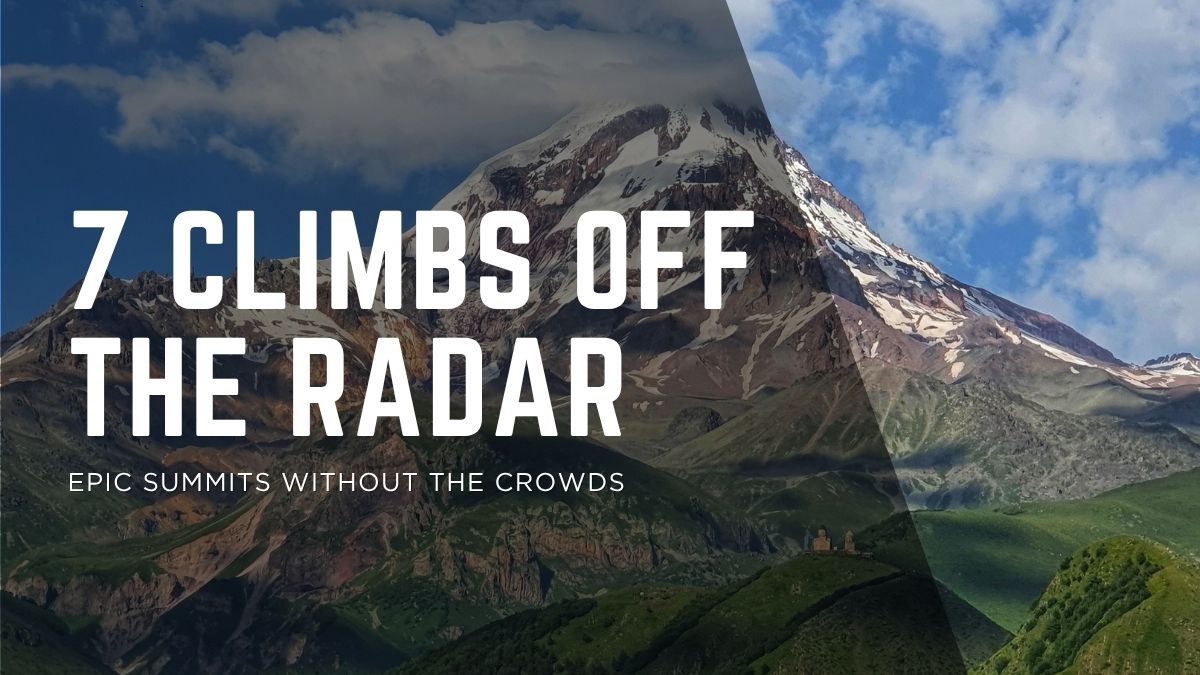
A glaciated 5,000er above the Gergeti valley, where the famous hilltop Trinity church ends up in the foreground of half the photos, with a route that passes an abandoned high-altitude meteorological station turned climbers’ refuge. This one is real early mountaineering, crampons, rope, glacier travel, standard gear for a first-peaks graduate, in a country whose food and hospitality alone justify the flight.
The numbers: 5,054 m. Three to five days from the town of Stepantsminda via the old meteo station hut. Real glacier travel: crampons, axe, rope, guide strongly recommended. Season roughly June to September.
5. Iztaccíhuatl, Mexico (5,230 m / 17,160 ft)
The “sleeping woman” beside Popocatépetl, and the natural companion or alternative to Orizaba on a Mexican altitude trip. The name is literal: the mountain’s silhouette is a woman lying on her back, and the standard route from the high La Joya trailhead climbs along her body, over “the knees” toward the summit at “the breast,” with her smoking neighbor Popo (closed to climbers, very much active) putting on a show across the valley. It’s a long, high scramble-and-trudge rather than a technical climb in normal dry-season conditions, which makes it one of the best pure altitude classrooms in North America: real 5,000-meter air, honest terrain, and a weekend footprint from Mexico City. The classic play is Izta first, Orizaba after, and both before anything bigger.
The numbers: 5,230 m. One to two days from the high La Joya trailhead, guided recommended. Mostly a high scramble and trudge. Late season can add snow. Dry season roughly November to March.
6. Huayna Potosí, Bolivia (6,088 m / 19,974 ft)
Widely marketed as the world’s most accessible 6,000-meter peak, and for once the marketing is roughly honest: a high trailhead near La Paz, a two-to-three day guided climb, and genuine glacier mountaineering with a knife-crest summit ridge above a sea of Andean peaks. “Accessible” refers to logistics, not effort. At 6,000 meters, nothing is free. Fair warning on the other half of the claim, too: this is the busiest peak on this list, and climbers will tell you it’s no secret. Ask around a Kilimanjaro group, though, and count how many have heard of it. As a first 6,000er, it has few rivals.
The numbers: 6,088 m. Two to three days guided from La Paz, with a high camp above 5,100 m. Glacier climb: crampons, axe, rope, all typically provided. Dry season May to September, after real acclimatization in La Paz.
7. Sajama, Bolivia (6,542 m / 21,463 ft)
Bolivia’s highest mountain, a colossal ice-capped volcano standing alone above a national park of hot springs and the highest forests on Earth. Remote, quiet, and a serious high-altitude climb that rewards a proper acclimatization ladder. It’s on our own list.
The numbers: 6,542 m. Typically three to four days from Sajama village, guided, with a high camp and a glaciated summit push. Dry season May to September, on serious prior acclimatization.
The pattern across all seven: the world’s supply of enormous days is much larger than the famous list suggests, and the currency is always the same. An aerobic engine, durable legs, respect for altitude, and the months of preparation that get you up any of them, famous or not.
How to choose among the seven
These seven underrated mountains to climb sort into three rungs. Pick from the rung that matches where you are.
Big days, no technical gear: Olympus, Toubkal, and Point Lenana. These are trekking summits, achievable by any fit hiker with the legs for long climbing days, and each fits inside roughly a week of travel. If you’ve done a serious trek and want a summit with a name on it, start here.
First real mountaineering: Kazbek and Iztaccíhuatl, from two different directions. Kazbek is the full glacier curriculum, crampons, rope and all, for first-peaks graduates. Izta is the altitude classroom: minimal technical demand, maximum thin-air education. Either one is a two-week trip done right, acclimatization included.
The 6,000-meter rung: Huayna Potosí and Sajama, in that order. Both demand real acclimatization time in Bolivia before you rope up, and both reward it with summits higher than anything in the Alps. This is the rung where the mountaineering ladder gets serious, and where the engine you built at home gets its full audit.
That preparation is what we build: Trekking Fitness Plan for the trekking peaks, Mountaineering Fitness Plan for the glaciated ones.
