
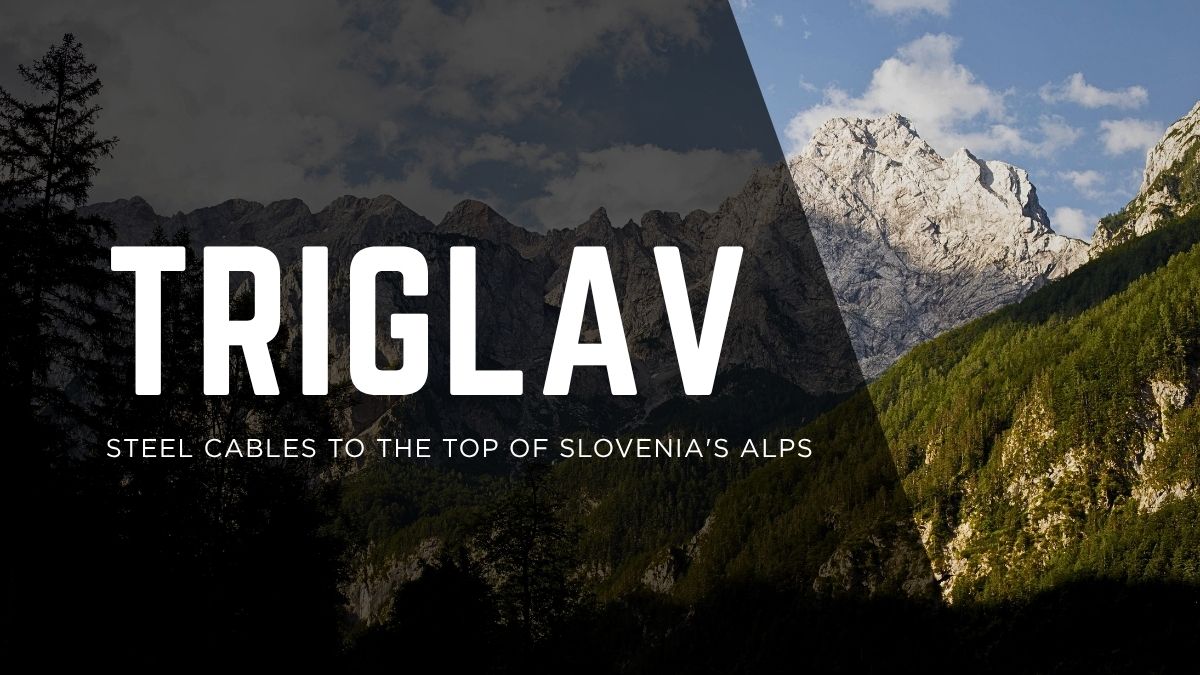
Most countries put stars or stripes on their flags. Slovenia put a mountain on theirs, and then made climbing Triglav a rite of citizenship. The saying goes that you’re not a true Slovenian until you’ve stood on Triglav’s summit, and judging by the roughly 80,000 people who climb it each year, the nation takes the assignment seriously.
Here’s what makes that remarkable for the rest of us: the mountain worthy of a flag is genuinely climbable by a fit, prepared hiker, sits in one of the most underrated alpine regions in Europe, and costs a fraction of what the famous Western Alps charge for a comparable adventure.
The mountain and its tower
Triglav rises to 2,864 meters at the heart of the Julian Alps, the limestone range Slovenia shares with Italy. The name means “three headed,” for its triple summit profile, and the mountain appears on both the national flag and the coat of arms, which makes it maybe the only summit in Europe you can climb after seeing it on your entry stamp.
On top stands the Aljaž Tower, a small metal storm shelter with a story that explains the whole national relationship. In 1895, a Slovenian priest named Jakob Aljaž bought the summit for a token sum and built the tower there, deliberately staking the mountain as Slovenian ground during an era when the empire around it was busy Germanizing the Alps. The little tower became a quiet act of national defiance, then a symbol, then the mandatory summit photo for four generations and counting.
And when first timers reach it, tradition kicks in: summiters get “baptized,” a ceremonial initiation that classically involves a light whipping with a climbing rope, administered with great cheer by whoever in the party has climbed the mountain before. Agree to it or negotiate it down to a handshake, but know it’s coming.
What the climb actually involves
Triglav is a hike that ends as a via ferrata, and that final section is what separates it from a walk up.
Every route to the summit funnels into a ridge protected by steel cables and metal rungs. The scrambling isn’t technically hard, but it’s narrow, airy, and vertically committing, with real drops on both sides, and it demands a head for heights and sure feet, especially in traffic, and especially on the way down. Most climbers wear a via ferrata kit, harness, lanyards, helmet, and clip through the cabled sections. Guides provide and teach the gear, which is one of several good reasons first timers hire one.
The standard trip takes two days. The gentlest line starts from the Krma Valley or the Pokljuka plateau: a long, steady day of hiking to Triglavski dom na Kredarici at 2,515 meters, the highest hut in Slovenia, sleeping practically at the foot of the summit pyramid. Day two goes to the top early, 1.5 to 2.5 hours of ridge work past the sub peak of Mali Triglav, then back down and out, six to eight hours all told. The famous harder alternative starts from the Vrata Valley under Triglav’s north face, a 1,000 meter limestone wall that’s one of the great faces of the Alps, with the Tominšek and Čez Prag routes climbing beside it. Fit, experienced parties do the whole mountain in a single huge day. Nobody enjoys it.
The demands are honest ones: 1,700+ meters of ascent, most of it repeated in reverse on the same day as the summit, the descent being where unprepared legs get found out, plus the exposure factor, which no amount of cardio fixes if you’ve never tested yourself on airy terrain. Season runs roughly late June through September. The huts are busy, book ahead, and the summit ridge on an August weekend is the one crowd you’ll find in the whole country.
Why Slovenia might be the best value in the Alps
Here’s the part that gets buried under the flag story. The Julian Alps deliver a genuinely alpine experience, limestone walls, high huts, emerald rivers, at prices and crowd levels the Western Alps abandoned decades ago. Lake Bled and Lake Bohinj sit at the mountain’s feet and are destinations in their own right. Guided two day Triglav climbs cost a fraction of an equivalent Matterhorn area program. And the surrounding national park is laced with enough trails, via ferratas, and quieter summits to fill a second week easily.
For a trekker eyeing a first cabled scramble before bigger alpine goals, or for anyone who wants an alpine summit with an actual story attached, Triglav is about as good as Europe gets per dollar and per day off work.
Just train for it like it matters. A nation’s mountain deserves better than arriving on gym fitness and hope, and the summit ridge has a long memory for people who skipped leg day.
