
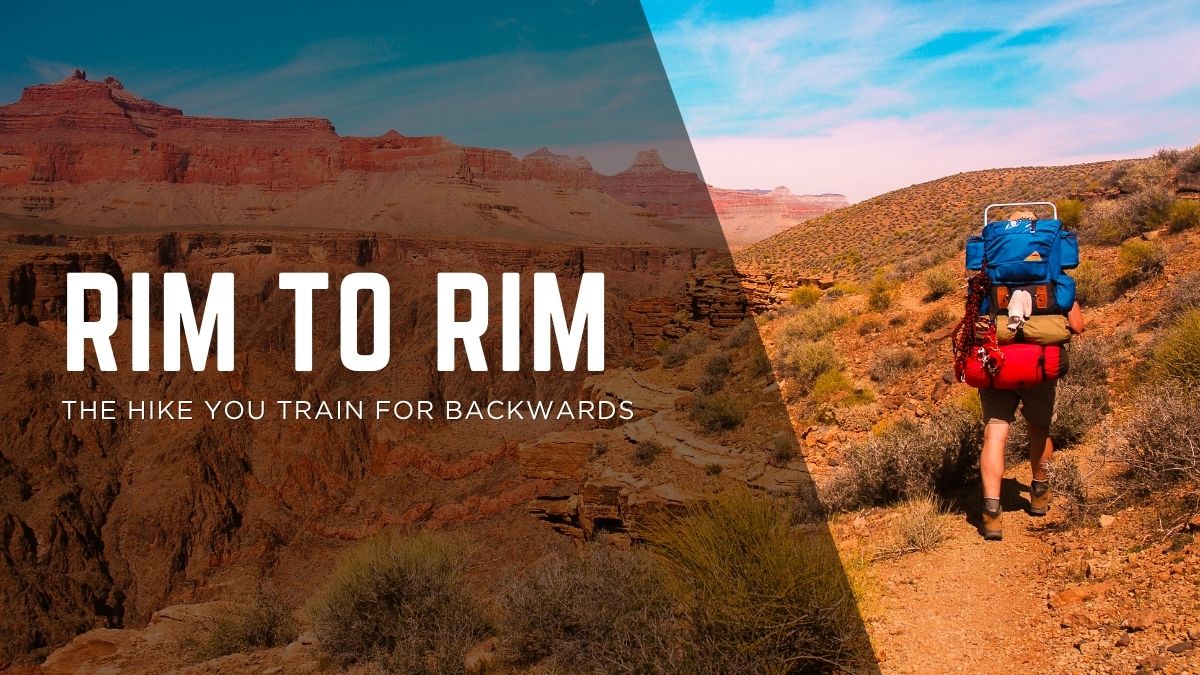
Rim to Rim status, October 2026
As of October 1, 2026, a rim to rim crossing is not possible. An August 29, 2026 flash flood in Bright Angel Canyon closed the entire North Kaibab Trail and Phantom Ranch, including Bright Angel Campground and both bridges over the Colorado River. The South Kaibab is also closed below Tip-Off Point, and the Park Service has given no reopening date.
Even after the flood repairs, a separate Transcanyon Waterline project closes the North Kaibab between Redwall Bridge and Cottonwood Campground from October 15, 2026 until about February 2027. On the North Rim, the 2025 Dragon Bravo fire destroyed the Grand Canyon Lodge, and there is no lodging inside the park this season. Check the NPS trail status page before you plan anything below.
On a mountain you climb fresh and descend tired. Rim to Rim reverses that. You start at the top of the Grand Canyon, descend about 1,750 meters (5,760 feet) from the North Rim to the Colorado River on fresh legs, then climb 1,340 meters (4,380 feet) out the South Rim via Bright Angel with all that downhill already in your quads. The temperature rises as you go down, so the climb out starts in the hottest part of the route.
The full day is 34 to 38 km (21 to 24 miles) depending on which South Rim trail you use, with about 3,000 meters (10,000 feet) of total elevation change. Most hikers take 10 to 15 hours, or split it with a night at the bottom.
Those numbers are from the National Park Service North Kaibab Trail sheet. Going south to north flips them: 1,340 down and 1,750 up, which is the harder direction.
Rim to Rim training starts with the descent
Sustained descending does more muscle damage than climbing. Your quads and calves spend two to three hours braking your body weight, lengthening under load on every step, and that eccentric work builds damage you don’t feel until later. In the Canyon, later means the climb out.
The climb is not beyond most people who attempt it. Arriving at it with legs the descent has already spent is what stops them. We covered the mechanism in why the descent is what breaks you, and Rim to Rim is that problem laid out as a route.
The bottom is the hottest part
The inner gorge is a different climate from either rim. In summer it regularly passes 38°C (100°F), 20°F or more above the rim, and the Park Service warns against inner canyon hiking between 10am and 4pm in those months. That’s why the classic R2R seasons are spring and fall: roughly mid May to early June and September to October, when the North Rim is open and the bottom is survivable.
The hottest part of the route is also where you arrive most tired. Start time is the fix, and it’s covered below.
Turning around does not help
On a mountain, a tired hiker turns around and walks down to the car. From the river, either rim is a climb. So the plan matters more here than on most trails this well known: water, start time, and an honest read of your fitness.
Water is the variable to check hardest. The inner canyon pipeline breaks often, seasonal taps go off, and the Park Service posts what’s running on its key hiking messages page. The same page lists trail closures, which happen for fire, flood, and pipeline work and can last months. Read it before you book and again the week you leave.
Four training priorities, in order
1. Train the descent like it’s the crux, because it is. The preparation that pays back most is eccentric leg strength: slow step downs, downhill hiking with a daypack, tempo squats and lunges with a three to four second lowering phase. Then rehearse the order. Find the biggest sustained descent you can reach, go down first, and climb back up after. If that means descending your local hill and turning around at the bottom, that’s the workout.
2. Build the 10 to 15 hour day. That needs the same steady, conversational pace aerobic base a big trek does, built over 8 to 16 weeks with progressively longer efforts and time under a loaded pack. Add back to back long days. Plenty of R2R hikers descend one day, sleep at Bright Angel Campground or Phantom Ranch (both book out months ahead), and climb out the next, which makes it a two day event and your training should include two day efforts.
3. Rehearse heat and fueling. Heat readiness is part fitness, part habit. Train in warm conditions if your climate allows. Practice drinking on a schedule rather than on thirst, eating regularly and salty, and holding a conservative pace when it’s hot. Know the water sources on your route before you go, and know that the list changes.
4. Start in the dark. Be well into the descent before sunrise and climbing out before the afternoon heat. A 3am or 4am start is normal for a one day crossing in the shoulder seasons.
What the day is
Rim to Rim covers vegetation from ponderosa and fir at 2,500 meters to desert scrub at the river and back up again, through rock that gets older every hour you descend. It is within reach of a prepared hiker. Prepared here means a couple of months of the right training, most of it pointed downhill.
R2R takes descent strength, time under a pack and a long aerobic day. The Trekking Fitness Plan builds them with step downs and slow eccentric lowering from week 1, strength and aerobic conditioning, and a ruck progression from 45 to 75 minutes building to 3 to 4 hours by week 8.
